NaNoWriMo Day 3 (11/03)


Yesterday, I made the mistake of eating too much for dinner before settling down to work. It took almost two hours to go from having finished eating to actually productively working on something. Two long, sleepy hours of trying to decide if more caffeine or a quick nap was what I needed. Needless to say, I was quite glad I got started earlier, especially because I knew I’d need to write more blog posts ahead of time since I wanted to have a few drafts of prompts, shares, and tips prepared for the days I was going to have trouble getting reliable internet access. My writing laptop intentionally sucks at pretty much everything but playing DVDs and word processing programs.

My laptop can travel with me anywhere, but a lot of the stuff I want to do with my blog and the community I’m trying to build require the desktop/browser applications. Writing on a phone is doable in a pinch, but I’d rather have a dedicated laptop signed by my favorite authors and giving me their best instructions on how to be a writer (Patrick Rothfuss signed it and then just wrote “WRITE!” on it. Super simple stuff.).

Daily Prompt

We all enjoy stories about triumph. We all enjoy seeing characters we love succeed. In order for that to happen, however, we need to see them challenged. If we really want to see them grow, that often requires we see them fail. Today, write a scene where one or more of your characters are struggling or failing. Set the stage for a later success by showing them in a situation where they are out of their depth.


Sharing Inspiration

There’s a meditation technique used in various psychological care settings for returning to a calm, centered mental state while trying to work through some of the thornier types of problems. The idea is to build a place in your head that has all of the things that most relax you and then to tie it to a single word so that mentioning the word or focusing on it can bring you back to that calm place and feeling. Doing something similar is super useful for writing because relaxing and helping to clear away the mental clutter that accumulates makes it easier to get the words onto the page. If you like rain or thunderstorms like I do, there’s a wonderful website out there that can provide the perfect backdrop of sound for your writing sessions. If you want some good (video game) music to go with it, check out this playlist I made on YouTube.


Helpful Tips

As you get further and further into your writing, don’t forget that there is no one way to successfully write a story. To some writers, it is like a grandly designed building: everything planned out before construction starts so that everything falls into place exactly where it is needed as it is needed. To others, it is like a patchwork quilt:  entire segments are done cohesively and together, but there is no real rhyme or reason to all the parts until you start sewing them together at the end. To me, it is like climbing a mountain: I know the mountain is there and I know my goal is at the top, but the exact path isn’t something I necessarily know before hand, so sometimes I take wrong turns and need to double-back or spend a lot of time trying to overcome an obstacle before I can get back to trailblazing. You are not obligated to do it in any particular manner. Meander or make it up as you go along. Do what feels write (ha) or abandon it at the side of the road when you feel it’s not working. All you need to do is keep working.
NaNoWriMo Day 2 (11/02)

Yesterday, I began writing. I was up late, into the early hours of yesterday, getting my community all set up and wound up feeling exhausted all day because I’m apparently an old man who can barely function on 4-5 hours of sleep. As a result, I’m a little behind where I’d like to be in terms of word count. Not too far, maybe 500 words, but far enough that I really had to struggle to decided whether going to bed was a better decision than just powering though until I reached 1,666 words. Unfortunately, the decision was taken out of my hands once I started dozing off around 11:30pm. Sometimes, I can write quite proficiently when I’m dozing off. Last night was not one of those nights.

That being said, it still felt delightful to be getting back to writing, even if I’m still not sure where my story is going or what it’s really going to wind up being about. The verb tense and narrator have changed twice so far. The person (as in, first person or third person) has only changed once so far, but I wouldn’t bet against it happening again. I’m excited to get home from work and get back to writing this story! I hope your writing efforts are starting off well!

Daily Prompt

As writers, or creators in general, we often feel we do our best work in a safe space we’ve identified. Be it a quiet office, the privacy of our bedroom, or the bubbly atmosphere of our favorite coffee shop, we all have a place we feel is key to doing our best work (or maybe even key to doing any work at all). What places does your character have that make them feel comfortable like this? How do they handle when one of these spaces is invaded? When one of these spaces is taken from them? Write a scene about your character dealing with the loss of one of their favorite places and how they try to protect or reclaim it.


Sharing Inspiration

I am a giant nerd. There’s no pretending that’s not true and I like to embrace it when I can. If this case, I embrace video game music from games I’ve enjoyed. Good video game music is obtrusive enough to be noticed, but not so much that it demands focus until you actively put the game aside to listen to it, at which point it reveals its hidden depths. This makes it ideal for me when it comes to writing or focusing on a difficult task. One of my favorite collects (partially for nostalgia and partially because of the variation in the music) is a one-hour video of route music from various Pokemon games. Check it out and see if it helps you buckle down and focus when your mind begins to wander away from your writing.


Helpful Tips

The best trick I have up my sleeve is perseverance. Write every day, even if it’s not a “full” amount. Sit down, open your notebook or word document or whatever, take a look at what you’ve got so far, and add to it. Repetition is the key to building a good habit and even a few minutes here or there is enough to keep it up. Write every day and write everywhere. Don’t skip a day because you’re busy. Bring a notebook with you or find a way to get your document onto your phone (google drive is excellent for mobile document editing) so you can write on the go. Write on breaks, between meetings, and while waiting for the bus (I don’t think any of you take the bus, but you know what I mean). Just write. As Shia Lebeouf famously said, “Just DO IT.” Or, if you’d prefer, as every author I’ve ever asked for their best advice has said: “WRITE!”


NaNoWriMo Day 1 (11/01)

Hello Everyone! It has been a while since I posted. I’ve been rather busy with moving and getting over a toxic situation, along with starting something new and wonderful. But now it is November and that means it is National Novel Writing Month! As I’ve done the past couple times, I’ve given myself a challenge on top of writing the 50,000 words of a new story. This year, I am doing 50,000 words AND managing/leading a small support community of other people participating in NaNoWriMo.

Since I hate to waste, I’m going to share the tips, suggestions, and writing prompts I posted for that community on my blog every day, along with a small commentary on what I’ve been doing or how writing is going for me. If you’re doing NaNoWriMo as well, good luck and I hope some of my stuff helps!

Daily Prompt

As a Human, we have more senses than we typically consider. We wrap them up in a neat little package as “The 5 Senses,” but isn’t hunger a sense? What about how you know where all of your limbs are when your eyes are closed? How you can feel the passage of time? Today, write about your character feeling something through their senses. Pick one to focus on more deeply or make one up for them to have that no one else does and explore what’s that like for them.


Sharing Inspiration

This is the song that I heard today that helped me narrow the focus on my story. I’m not entirely sure how yet, but I know that I’ll figure it out as I go along so long as I get going.


Helpful Tips

I don’t know about you guys, but having a blank page on my computer screen, staring me down, is super terrifying. If you’re having a hard time facing down an intimidating blank page, I suggest starting your writing with a bunch of notes about thoughts you’ve had. Just jot some things down as quickly as you can. If you’re working on world-building, start a glossary. It’ll get you past the blank page AND help you keep track of important events, places, or people you mention or create. If none of these help, just find a bunch of text, copy it, and paste it into your document. Once the page is no longer so blankly white, it’ll be easier to face.

If you’re having a hard time staring at your computer all the time, or your eyes start to feel super worn, or you start getting a headache after sitting down to work, you’re probably struggle with the dreaded blue-light issue. Monitors create a huge amount of off-white bluish light that is (no joke) scientifically proven to be bad for your eyes and to negatively impact your ability to sleep. To counteract this effect, I recommend the program f.lux. It is available for free and the website is super friendly. I have this program on literally every screen-bearing device smart enough to run it. The ability to chance the color temperature of my monitors lets me work on a computer all day and them come home to more computer work without developing migraines. I highly recommend it. If you get it and want suggestions, feel free to ask.

Wisdom, Intelligence, and Unanswered Questions

I don’t know if this is a discussion most people have with any kind of frequency but, as a D&D player, I’ve often discussed the difference between wisdom and intelligence.

The trickiest part of the whole discussion is that it feels like the distinction is super clear in your mind, but the actual explanations you try to provide always wind up feeling hollow, inadequate, or you just can’t think of any. The popular explanation in D&D groups follows the “Tomato Explanation” of character attributes. “Strength is your ability to crush a tomato. Dexterity is your ability to dodge a tomato. Constitution is our ability to eat a bad tomato. Intelligence is knowing a tomato is a fruit. Wisdom is knowing not to put a tomato in a fruit salad. Charisma is being able to sell a tomato-based fruit salad.”

There are any number of jokes that go along with this (my favorite is pointing out that a tomato-based fruit salad is salsa and then someone else declaring that I’m the party’s bard now), but they all ignore that you could easily make the argument that describing salsa as tomato-based fruit salad is actually an aspect of intelligence. As is knowing that tomatoes don’t pair well with most fruits. Any time a player makes a claim about how the mental attributes work, another player could make a convincing argument that all of those examples are actually just all a part of the same attribute.

Then, when you take these discussions out of their D&D context, you continue to run into the same problem. Is making good decisions really the result of being wise, or is it an aspect of being intelligent? Are you able to anticipate the outcomes of your actions because some innate part of you understands the correct choices or are you able to predict the end results of what you do because you can understand all the variables and their consequences? Hell, is this even a distinction worth making at all?

I’m fairly certain that wisdom and intelligence their own, discrete things. Maybe their differences aren’t super apparent when people have relatively similar amounts of each, but more extreme example make it much more clear.

Take, for instance, this software developed I worked with at my last job. He pushed at the very edges of what our code was able to do, creating these incredibly complicated activities that expanded what our customers thought was possible and laid the groundwork for future expansion beyond even that. He was probably one of the smartest people I’ve ever met. At the same time, by the end of his first year at the company, I was the only person who could work with him. I worked with him for almost two years and the next longest anyone else worked with him was 6 months. Third was 7 weeks. To put it bluntly, he was a condescending asshole who constantly belittled and insulted his coworkers, even if it wasn’t on purpose most of the time.

His example makes it pretty clear that intelligence isn’t something you can substitute for wisdom or charisma. On the other hand, one of my current coworkers is a super nice and competent guy. He’s better at his job than I can hope to be in anything less than a decade (we have the same job, he’s just the Senior version of it) and he has these piercing insights into how our whole team functions, along with being able to talk through things with people so that they come to see their best course of action. However, if you explain a new idea quickly, he can struggle with it for a bit before it finally clicks for him. Which shows plenty of wisdom can’t be substituted for intelligence.

To put it simply, I think wisdom is the ability to explain and intelligence is the ability to learn. I think the reason people have a hard time distinguishing between them is that they feed into each other. If you can learn easily, you are better equipped to explain things and being able to explain things well means that you have more opportunities to learn, even if you’re just learning from yourself. I can explain stuff to people very well because I know a lot, which means I can draw upon a lot of different comparisons so that what I’m explaining is housed in terms that are easy to understand. I also couldn’t begin to count to the number of times I’ve suddenly had a flash of insight into something when I’m trying to explain it so someone.

Despite the similarities between wisdom and intelligence, I think it is important to be mindful of the differences. If you start to conflate the two, you can wind up in a lot of awful situations because you relied too heavily on one when you needed the other. I can easily recognize when something I’ve said is wrong or has been misinterpreted based on people’s reactions (intelligence), but being able to anticipate that reaction and changing it beforehand (wisdom) is always better than apologizing and clarifying. Sure, it isn’t entirely reasonable to expect myself to always be able to do that, or to even spend so much time measuring my own words, but making a habit of sticking my foot in my mouth is also a pretty shitty way to live, even if I apologize afterwards.

I reflect on this a lot, specifically in the terms of thinking about how my communication affects other people. I spend more time measuring my words than I do speaking. To be honest, one of my biggest issues with myself is just how much I censor myself when talking to people: how much effort and energy I put into delicately phrasing things so as to not offend. This blog is supposed to be part of my effort to not spend so much time holding my silence, but I find myself avoiding certain topics and thoughts I’d like to explore because I know family and friends read this blog.

Maybe this is one of the reasons I feel like I haven’t made much progress in the past few years. Maybe I feel like I’ve stagnated because I’m blocking my own words, feelings, and responses in favor of giving other peoples’ higher priority. Maybe I’m writing this blog post without any insights and only unanswered questions because I don’t want to confront the truth that’s sitting right in front of my face, but is still somehow hidden from my conscious sight. Or maybe I’m just going to keep asking myself this question for my entire life, and this entire blog is just one more way to explore possible answers.

Wisdom says focusing on questions gets you further than focusing on answers. Intelligence says that some questions have no answers and just mulling them over is enough to promote growth and mental development. I say that, like almost everything in life, the answer to this particular question is going to be something along the lines of “take care, but not too much.”

We Try Things. Occasionally they even work.

So, I’ve once more been struggling with my depression. Big surprise there. Kinda snuck up on the back of some of the stuff I was writing last week and just overwhelmed me when I wasn’t paying attention. Luckily, with my renewed focus on watching for it and the help of my friends, I was able to notice it quickly and come up with a few plans to circumvent it.

Historically, working out every day has been a good way to deal with my depression for a few reasons. There’s the health reasons, studies that suggest that regular exercise can have a significant positive impact on one’s mental well-being. There’s the easy reasons, that I’m generally too tired after a heavy workout (and those are the only kind I do) to be anything. Then there’s the mental reasons, that I’m finally making progress on one of my big goals by losing weight. All of that together leaves me at least neutral for as long as I can keep it up (usually 3-5 weeks) though I get almost nothing else done.

Another, more mentally productive, way to deal with my depression is by creating something. Writing is often a good way for me to take a step away from everything and let my mind work out my problems through my stories. When I was in college, working on building a set for a show or helping put together some internal improvement project for the theater was always very relaxing, letting my focus and keep busy while leaving my mind free enough to work through things in the background. Unfortunately, I’m not very good with music or visual arts, but I’m certain those would be just as helpful. Anything that gets me focused on and engaged in the act of creation always helps.

Sometimes, even working a lot (at my job) can help, if I’ve got the right kind of projects. Put in some overtime, rake in that delicious OT pay, and start making even more progress toward being debt free. A good amount of rewarding work (people recognize what I’m doing as being useful and I can contribute to the good of my team/company) is just the right kind of mentally exhausting. I get so wrapped up in what I’m doing to let my problems in and then I’m too tired to make myself fret about anything.

All three have worked individually in the past. Unfortunately, none of them would last for long. I wear myself out to the point of not being capable of working out again, or I get finish a project and can’t figure out the next steps, or I finish whatever work project had me so focused and I’m unable to find a new one to fill that hole. Eventually, they all come to an end.

Which is why, this time, I’m trying all three at once. Work 10 hours days and try to get super invested in an interesting work project. Workout immediately after work. Come home, eat something, have a cup of tea to help me stay awake, and then write/try-to-write until 11 or 12. The idea being that, when one of the three fails, I should still have the other two continuing on to prop me up until I manage to get the third one going again. So far, it’s working out pretty well.*

First, I pushed myself too-hard in my workouts initially and had to really dial it down, but that means I’ve just got a little more time and energy for writing. Then I picked my workouts back up again, full-force, and was too tired to write for a couple of nights, but since I workout after work I was able to continue investing in my latest work project.

Unfortunately, there are still some flaws. After an entire week of this, I hit Friday and couldn’t do anything after 1:30. I had to run a meeting about my project which taught me a lot and forced me to herd cats for an hour and a half. Senior Coworker Cats. Some of whom had been at the company longer than I’ve been alive. I went home pretty much immediately afterward and decided to take all the pictures off my phone as my day’s project. 800 pictures later, I played a few rounds of video games with friends and went to bed.

All-in-All, it seems to be working aside from a few quiet moments here or there were I just kinda feel sad, but those are growing shorter and less frequent after only a week. Maybe, if I can keep this up long enough, they’ll disappear entirely.


*Side-effects of the pursuit of three major goals may include drowsiness, irritability, a zombie-like demeanor, and a severe allergic reaction to social interaction. But hey! At least you’re not a depressed sack of sad!

Dungeons and Dragons: What’s the Story?

As you might be able to infer from other parts of my blog (or perhaps just remember from a previous post), my favorite part of playing Dungeons and Dragons is the storytelling. DMs developing worlds and spooling out stories in every direction. Players and their characters taking the reins of the DMs stories and telling smaller ones through the way their characters develop. The stories we see at the end of a campaign as we look back and admire all we’ve done since we started. I love them all.

The stories I prefer most are the ones I can tell as a DM. Unfortunately, telling a story as a DM can be a bit of tricky business. If the DM is too forceful in their storytelling, the players can wind up feeling railroaded–which means that they feel like their characters have been placed on a track and they have no options or choices that really make a difference. Sometimes, with certain players, a bit of railroading is necessary if you want them to actually be doing anything. Sometimes, the players don’t mind a little firm direction, if you’ve set it up correctly. If a DM tells the story right, it’s possible the players won’t even notice that it’s happening.

Different DMs come at storytelling from different angles, but most fall into one of a few categories. There’s the adversarial DM, who is trying their best to kill the players’ characters and the players need to use all their wiles and skills to escape the DM’s traps and narrative sticky spots. There’s the supportive DM who just wants to ensure their players are having fun, bending the rules so they don’t get in the way of the players reaching their goals. Finally, there’s the DM who just lets the dice decide, setting up situations that they players can get through with luck and/or skill but could still include lethal consequences if they’re foolish or really unlucky. Personally, I tend to flip-flop between the last two categories.

I like the supportive style for fun-oriented campaigns. It is generally more fun if the players are successful (and death isn’t NEARLY as funny as some kind of persistent negative consequence), and I’m not one to let a mere rule get in the way of a good joke. Plus, one of the keys to good humor is subversion of the expected. If a player opens a chest expecting a monster, trap, or treasure, one of the best things to put inside it is a series of slightly smaller chests. Top the whole thing off with a “goblin punch” aimed at someone’s vulnerables and you’ve got yourself a hilarious setup for humor.

For my more narrative campaigns, I prefer the “let the dice decide” style. The best way to involve the players, to get them to suspend their disbelief and emotionally invest in the campaign, is to make them feel like their actions matter, like their decisions have consequences. You have to balance risk and reward so that they have the opportunity to fail and succeed on a smaller scale on a regular basis, so they never develop a god complex. Then mix in opportunities for them to fail or succeed beyond the scope of the situation and you can really hook them. Reward them when they’re clever and punish them when they’re making poor decisions. The exact nuances of how to do exactly that are a blog post of their own.

Situational railroading has a place in the narrative campaigns. Sometimes, because of the past choices a player has made, the entire party winds up in a situation they can’t escape from. Sometimes you need to move them from one city to another, so you “railroad” them by provide a reason they would NEED to move. On the flip side, that level of guidance can absolutely kill the fun in a more relaxed campaign. The whole point of the relaxed style is to let the humor and feel of the room guide your choices as a DM, so you can keep people laughing and the funny moments rolling out. Dictating anything at that point can sour someone’s fun.

So far, in my narrative campaign, I’d like to think I’ve only engaged in the permissible kind of railroading. The only time I think that it could have been a little too heavy-handed was in order to help my players remake their characters. One wanted to change pretty much everything and another needed a way to be introduced to a prestige class, along with make a few changes to the way his current class worked. So I laid out the path for them, knowing they’d take the bait, and then forced them to keeping walking down it.

In my opinion, the key to building ANY kind of narrative structure in a D&D campaign (and this includes permissible railroading), is to make sure the players never feel like their choices don’t matter or that they don’t have any choices. They should always have the option to just turn around and walk away. They should always be able to make decisions about how their character acts in a situation or how their character plays it all out, even if they don’t have a choice about what that situation is. In short, never take away ALL of their agency. Unless they’re being mind-controlled. That’s a whole different story, though.

I’m writing all of this up as I’m preparing for a D&D session with my narrative campaign. I hope none of them see this and read too deeply into it. Today, I just want to gather my friends around a table and help them tell the story we’ve been working on for almost a year and a half. No railroading, no narrative traps, just a lot of fun with my friends.

Announcement!

Turns out, Naked and Afraid: Breath of the Wild edition starts tonight! Come join my friend Volk (nickname) and I for some wacky fun starting at 8pm with a few breaks for snacks and dinner. We’ll be playing for most of the weekend, so come feel free to join us at your leisure.

A Breath of Joy and Light in the Dark

In two days from today, on Friday the 30th of June, Nintendo is releasing the first segment of the DLC for their latest smash-hit Legend of Zelda game: Breath of the Wild. This bit of post-release content is going to add quite a few wonderful features to this already amazing game. The one I’m looking forward to the most is the map tracker. Finally, there will be a way to tell which parts of the map I’ve never actually been too. It, and the Korok Mask (that rattles when you near an undiscovered Korok), are what are finally going to let me find the other 100 or so Koroks I need to finish upgrading my inventory.

At a very close second comes Hard Mode. Basically, it’s going to let me replay the entire game with tougher enemies (every enemy has been replaced with a one-tier tougher copy and the maximum tier has been raised) and a few twists. The only twist they really detail is that now there will be little floating platforms with enemies and chests on them. I really can’t wait to see how it all plays out.

Other than those two things, there are some outfits and a challenge mode they call “Trial of the Sword” that will get you a stronger Master Sword. Nintendo has done a pretty good job of outlining the DLC and driving hype for it. I know I can’t wait.

A project I mentioned in a blog post a few months ago, after I finished my initial play-through of the game, will be starting sometime this weekend. I’ve taken to calling it a “Naked and Afraid” run-through. The rules I’ve set include no armor other than hats, a new fire must be lit every 5 minutes or so, as long as there is flammable material around, and I must provide a running monologue of poor Link’s thoughts as he runs from everything, dies ignobly, and does his best to ward off foes in nothing but a hat and his shorts. I intend to stream it via my Twitch channel this weekend. Maybe on Monday, the 3rd, since I have the day off.

I am admittedly very fond of this idea because it juxtaposes quite nicely with the themes of the game. In the game, you are a warrior awakening 100 years after you nearly died, your land in ruins, your people scattered, and the woman you swore to protect the only remaining barrier between the evil scourge you must someday face and the final destruction of the world. So you run around screaming like a small, excited child wearing nothing but a hat and your boxers.

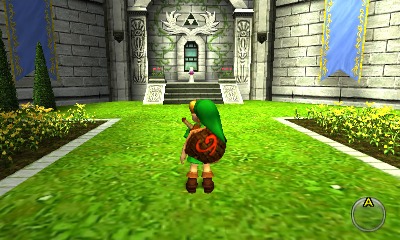
When I first played the game, it was rather depressing. You wander through a world destroyed long ago with a quiet, melancholy sound track fading in and out of the background to selectively emphasize the horror and sadness around you. One of the first places you find is a room that matches the iconic meeting between Link and Zelda in Ocarina of Time. In this game, it lies in ruins. Windows shattered, walls toppled, and serenity destroyed. All that remains of that memory is a quiet thread woven into the game’s theme, a slight change in the melody that plays Zelda’s Lullaby throughout the time you’re in or near it.

I won’t spoil what you find there, but Makar Island was the biggest blow to me. I remember playing Wind Waker and always enjoyed the little Korok named Makar, that you save from evil in your second dungeon and that you assist in bringing back the Master Sword’s power. Makar’s Island lies to the west of Hyrule Castle. I suggest checking it out.

The whole game is full of these moments. Sad little references to past games and people you’ve met throughout the years of playing Legend of Zelda games. All of it placed through this game to drive home that point that, yes, Good will eventually triumph over Evil, but you failed to keep it at bay and now it is impossible to return to the life you knew before. Nothing can ever be the same again.

I know they were working on the game for years, long before the current political climate in the US and most European countries reared its ugly head, but it really feels like the game was meant to come out now, to serve as another reminder that we need to keep fighting so we can salvage whatever we have left, even if we’ve already lost a lot.

That’s a lot of heavy themes for a game. I guess that’s why I want to do my silly play-through. Not to mock the severity and solemnity of the game, but to stick truthfully to my ideal that laughter and joy are our best defenses against this kind of evil and darkness. The DLC hits the internet Friday and my stream will hit it sometime shortly thereafter, so come laugh as I make an idiot of myself and one of my favorite protagonists so we can have some fun and fight off the gloom that threatens to swallow us whole.

Rain Storm

I am relaxing on my bed, right arm tucked behind pillows that support my head and left leg crossed over right. My toes, freed from their normal cotton restraints, idly fidget in the cold wind that blows through my apartment. In my free hand, I hold a book over my head so that, should I begin to doze, I will not sleep for long. A book to the face is enough to wake most anyone.

I stir as the wind picks up, the unseasonable chill it carries into the beginning of summer deepening. It convinces me to wrap my lower legs and feet in a blanket. A chill breeze is easy to ignore. The seeping cold is not. My nose grows cold and I occasionally wish for a light blanket for my upper body as well, but not enough to pull myself away from this place of peace and relaxation.

I begin to doze every page or so. At one point, I miss my face and my doze extends into a short nap. It would have been a long nap if not for the flecks of icy water that splattered on my elbow. I wake, some five minutes after my nap began, almost an hour after I cease to notice the world around me, to find the rain sheeting down outside my window. The cold gusts that had been pushing through my apartment now carried rain with them, as far as my bed. It is unexpected. The forecasts called for clouds and wind, no rain.

I rouse myself from my stupor, propping myself up on my elbows so I can nudge the window, closing it to about a quarter of its full capacity. After fumbling for my bookmark and putting my book on my bedside table, I lay back again. I breath deeply of the damp heady aroma of mixed rain and churned dirt that flows in through my window and think of nothing as I stare into the sky. My peace grows as I let my senses embrace this rain.

Two minutes in, I am roused by the familiar anxiety of every unexpected storm. I rise from my bed and trek into the main room. There are no raindrops on the window screen and half the small porch beyond it is still dry. My couch is safe unless the wind changes. I stand and watch the waves of rain cascade through the parking lot, hammering the puddles that never seem to disappear these days and making me glad I no longer live at the bottom of a hill.

I retire to my room again and find the playlist I’d created not even a week ago. I turn it on and let the five songs that remind me of the calmness and relaxation I only truly feel during rain storms play through the speakers of my small stereo. I take my place back on my bed, but leave my book on the nightstand. This time, I do not begin to doze. This time, I stay and breath in the rain as it falls, wishing I had a proper porch on which I could watch it. After a few minutes, I no longer desire it. I am content to recline on my bed and let it play itself out as I experience it through my window.

It takes only half an hour. Longer than other storms I’ve seen this month, but still nowhere near as long as I would like it to be. My playlist has only made it halfway through its second rotation. The rain leaves me behind with nothing but the damp, acrid scent of a small woods holding onto the humidity that it has acquired. This humidity is released slowly. Even when I climb into my car for work the following morning, it will still be there, making the whole area feel almost like a chilly sauna.

But tonight, as I drift off to sleep, the churned earth and plant matter scent of the rain and forest will keep me company. I return to my book and sigh contentedly, no longer focused on the storm’s end. It will be there in a few hours, when I need it. Tonight, I will sleep well.

Saling Away

One of the most frustrating experiences for me, in a definite “First World Problems” kind of way, is being in a bookstore during a sale and not being able to take advantage of it. Not because I lacked the funds to buy more books, of course, but because I couldn’t find more books I was willing to buy for full price.

I was at my local Barnes & Noble just yesterday, Starbucks coffee in hand, looking for the next volume of a manga I’m readying. While lazily scanning the shelves, I found that there was a sale on manga: buy two, get the third for free. Unfortunately, I couldn’t find another series that looked super interesting to me based on the cover and a quick skim. For those of you who read manga, you know that’s a pretty terrible way to judge them, but there’s not much else to go off of other than that without a recommendation from a friend or trusted reviewer. My go-to friend was busy ignoring his phone and none of the review sites I checked could help with my selection, so I had no help at all.

After futilely wandering the manga section for another 10 minutes without a reply from my friend, I made my peace with my single purchase only to go over to the mass-market paperback section and find a similar sale. Buy two, get the third for free. There was only one Terry Pratchett book in that section that I didn’t own and none of the other books looked terribly fun or engaging.

Being a somewhat picky reader, I couldn’t find any information from my trusted sources without searching every title individually and I had been standing around for long enough already that any more time would have felt awkward. Especially because a whole slew of people had come and gone while I dithered. I skimmed around for the other books I wanted–a replacement copy of Red Rising since I stuck my old copy in a Christmas grab bag and the third book in the trilogy, Morning Star–but none of them were a part of the sale.

There I was, standing around with two books that were a part of identical sales but didn’t qualify for each other’s sale (yeah, I asked), and zero inclination to buy anything else I could find. So I took my four books, grabbed two more Pratchett books that weren’t a part of the sale, and cried bitter tears as I said good-bye to my chance at cheap new books. It was a tough thing to do, to walk out of there with a sale whispering sweetly into my ear and wallet, but I had nothing to buy.

If you should happen to find yourself in a similar place, I’ll make some recommendations now so you can avoid my pitiable fate. I highly recommend checking out Tokyo Ghoul if you don’t mind a little gore and would like a refreshing and well-written take on zombiism. It follows the life of a young man who gets turned into one of these “ghouls” as the result of a life-saving surgery and how he struggles to find his place in both societies. There is plenty of action and drama, but the characters are endearing, believable, and worth the wait for each new volume.

As far as sci-fi goes, I recommend the Red Rising trilogy–by Pierce Brown–if you like sci-fi and social commentary. It’s a bit heavy-handed at times (nowhere near as heavy-handed as some of the older sci-fi is, though) and a bit dense to read because of the stylized language Brown uses, but it’s definitely a pleasant read and a very engaging story. The protagonist is a young man from the lowest caste of society, a Red, who is the chief earner for his clan, who takes his place in a rebellion against their Gold overlords after his wife is killed for singing a particular song.

In less detailed terms, Brandon Sanderson is always enjoyable and anything by Jim Butcher is worth a read. Terry Pratchett is great for humor, as is Douglas Adams. Stephen King is great if you enjoy macabre stories and crude shock-value (seriously, the guy breaks/challenges social rules purely for the shock value they bring to his stories). Brian Jacques is one of my first favorites and Terry Brooks has a large series out that is now drawing to an end. I’ve got plenty more where all that came from, but dropping all those names would double the length of this blog post, so I’ll leave it at that for now.

Happy Saling!