Song in the Silence: A Loud Endorsement

“Song in the Silence” is the debut novel of Elizabeth Kerner, published in 1997, and the first novel in what eventually became a trilogy. There is a wonderful story captured in the pages, just waiting to be explored once you’ve managed to make your way past the stereotypically nineties cover art. I don’t know if I can say it was a unique story because my knowledge of female writers of fantasy from the nineties is sorely lacking (something I’m trying to change), but I can definitely say it had a much different tone from most other fantasy novels I’d read.

While the world doesn’t have the same kind of almost-human characterization some other fantasy novels go for, it still conveys a sense of breadth and depth to the readers. The bits of historical information Kerner provides to make the world feel real are worked into the flow of the story and they never feel like exposition or an information dump aside from one or two moments where a major historical event is shared with the protagonist so she understands the enormity of what’s going on. Even those moments feel a lot more natural than they otherwise might because they’re almost always delivered in the form of smaller stories told by one character to another. Though only a small portion of the world is shown through the course of the story, the introductory narration and the traveling the protagonist does firmly establishes a much larger world that you can feel hovering around the edges of the story as you read through it.

The mythology, which sets the stage for the main conflict of the novel and of the trilogy, is not entirely new though Kerner does a great job of breathing new life into it. The mythology plays into the trope of Dragons as beings of order and demons as beings of chaos, informing the ways the two groups interact with not only each other, but with the neutral humans who can, of course, pick either chaos or order. Which, in this story, means that humans can be good or evil, relying heavily on the cliché of order being good and chaos being evil. There is no way to avoid clichés entirely, nor is it necessary to do so, but this particular one has always felt like too much of an oversimplification to me. That being said,  I would call this particular cliche more of a pet-peeve than an actual issue in this case. Kerner’s story may lean heavily on the “human ability to be good or evil” idea, but the idea is used as less of a crutch and as more of a support beam. It is incorporated into the story as an important aspect of the story itself rather than used to prop up a weak philosophical concept a character is espousing. It turns from “chaos is evil and order is good” into “this person is evil and uses the power of chaos to act against order and good separately, in pursuit of their selfish goals.”

One of my favorite parts of the book is that every character in the novel could be you, your friends, or someone you’d meet at work. Unlike most fantasy characters, who I would not want to meet because they’d be insufferable, I would actually love to hang out with the people from this book. Maybe get a drink or a late brunch. They all have their flaws and they all tend to keep running into trouble as a result of them, but never in the same way. Some characters learn of others’ flaws and exploit them, young people are inexperienced and rather stupid, and the powerful are somewhat impulsive as a result of overconfidence. The protagonist, a young woman, falls into a few traps over the course of the novel because she is naive. She struggles with how to relate to some of the other characters because she learns of these huge gaps between her experience and theirs. The villain almost cackles over a steaming cauldron, but it is strongly implied that he’s gone insane at that point, as a result of all of the demon magic he uses. It feels a lot more natural because you can also imagine him cackling over a bowl of oatmeal or as he goes for a pleasant afternoon hike.

In direct opposition to the humanity of the characters (including the non-human ones), there was a rather heavy-handed romance subplot in this book. The protagonist and her love interest wind up in a relationship and loving each other not because they’ve gotten to know each other well and developed a relationship, but because they lay eyes on each other and begin to fall in love. There are prophecies mentioned here and there, as a part of the prophecies driving the major plot points of the trilogy, that make it seem like they were destined to love each other. After they’ve confessed their love for each other and had a soul-bonding moment, the relationship gets significantly more normal if you pretend they actually took their time getting to that point. I like the later depictions of the romance and their relationship better because it more closely matches the more human way most relationships in our world work.

I would recommend reading “Song in the Silence” if you want a book with interesting and real characters, a well-developed world that fits nicely into the “high fantasy” genre, an entire race of intelligent and rather “human” dragons, and don’t mind one of the major plot points being a Disney princess style romance that feels a bit shoehorned into the rest of the story. It is a rather quick read, though I recommend taking the time to pace yourself rather than attempting to devour it in one day. Though quick, it is still a bit too meaty for a single sitting.
 

A Breath of Joy and Light in the Dark

In two days from today, on Friday the 30th of June, Nintendo is releasing the first segment of the DLC for their latest smash-hit Legend of Zelda game: Breath of the Wild. This bit of post-release content is going to add quite a few wonderful features to this already amazing game. The one I’m looking forward to the most is the map tracker. Finally, there will be a way to tell which parts of the map I’ve never actually been too. It, and the Korok Mask (that rattles when you near an undiscovered Korok), are what are finally going to let me find the other 100 or so Koroks I need to finish upgrading my inventory.

At a very close second comes Hard Mode. Basically, it’s going to let me replay the entire game with tougher enemies (every enemy has been replaced with a one-tier tougher copy and the maximum tier has been raised) and a few twists. The only twist they really detail is that now there will be little floating platforms with enemies and chests on them. I really can’t wait to see how it all plays out.

Other than those two things, there are some outfits and a challenge mode they call “Trial of the Sword” that will get you a stronger Master Sword. Nintendo has done a pretty good job of outlining the DLC and driving hype for it. I know I can’t wait.

A project I mentioned in a blog post a few months ago, after I finished my initial play-through of the game, will be starting sometime this weekend. I’ve taken to calling it a “Naked and Afraid” run-through. The rules I’ve set include no armor other than hats, a new fire must be lit every 5 minutes or so, as long as there is flammable material around, and I must provide a running monologue of poor Link’s thoughts as he runs from everything, dies ignobly, and does his best to ward off foes in nothing but a hat and his shorts. I intend to stream it via my Twitch channel this weekend. Maybe on Monday, the 3rd, since I have the day off.

I am admittedly very fond of this idea because it juxtaposes quite nicely with the themes of the game. In the game, you are a warrior awakening 100 years after you nearly died, your land in ruins, your people scattered, and the woman you swore to protect the only remaining barrier between the evil scourge you must someday face and the final destruction of the world. So you run around screaming like a small, excited child wearing nothing but a hat and your boxers.

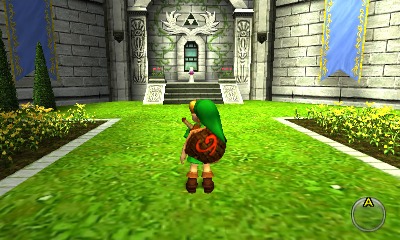
When I first played the game, it was rather depressing. You wander through a world destroyed long ago with a quiet, melancholy sound track fading in and out of the background to selectively emphasize the horror and sadness around you. One of the first places you find is a room that matches the iconic meeting between Link and Zelda in Ocarina of Time. In this game, it lies in ruins. Windows shattered, walls toppled, and serenity destroyed. All that remains of that memory is a quiet thread woven into the game’s theme, a slight change in the melody that plays Zelda’s Lullaby throughout the time you’re in or near it.

I won’t spoil what you find there, but Makar Island was the biggest blow to me. I remember playing Wind Waker and always enjoyed the little Korok named Makar, that you save from evil in your second dungeon and that you assist in bringing back the Master Sword’s power. Makar’s Island lies to the west of Hyrule Castle. I suggest checking it out.

The whole game is full of these moments. Sad little references to past games and people you’ve met throughout the years of playing Legend of Zelda games. All of it placed through this game to drive home that point that, yes, Good will eventually triumph over Evil, but you failed to keep it at bay and now it is impossible to return to the life you knew before. Nothing can ever be the same again.

I know they were working on the game for years, long before the current political climate in the US and most European countries reared its ugly head, but it really feels like the game was meant to come out now, to serve as another reminder that we need to keep fighting so we can salvage whatever we have left, even if we’ve already lost a lot.

That’s a lot of heavy themes for a game. I guess that’s why I want to do my silly play-through. Not to mock the severity and solemnity of the game, but to stick truthfully to my ideal that laughter and joy are our best defenses against this kind of evil and darkness. The DLC hits the internet Friday and my stream will hit it sometime shortly thereafter, so come laugh as I make an idiot of myself and one of my favorite protagonists so we can have some fun and fight off the gloom that threatens to swallow us whole.

Escaping Through Video Games: No Man’s Survival Craft

I don’t know about you, but one of my favorite things about video games is their ability to take the player away from their present situation. Whether the player is avoiding eye contact on the bus via phone Tetris or Sudoku (my personal preferences) or trying to get away from a bad day by delving as deeply as possible into their favorite RPG (Skyrim), these games provide a quick escape from the primary world. For a lot of people, that’s all they really need: a break from the pressures of their life and the opportunity to put it all away for a little while.

I enjoy that kind of escape immensely, almost as much as I enjoy reading. However, when I’m at my most stressed, at my most worn, when my OCD and anxiety are at their worst, this level of escape either isn’t possible or only puts my problems off until I stop playing (and I can’t tell you the number of nights I’m played games or read books until I’m falling asleep in order to put off that moment when they all come rushing back). I always need something that takes it a step further, that provides something beyond just the escape of a different world.

For a long time, that something was Minecraft. I’ve been playing it since my sophomore year of college and I’ve probably logged more hours to it than every other game I’ve played since. It was a world that was constantly changing and improving, a world where I was in complete control of the world provided I placed enough torches out to prevent Creepers from spawning. I could imagine whatever I liked and, with enough work, the game would come to reflect it. I leveled mountains, built lakes, and created entire mine cart pathways that took more than 10 minutes to go from the central hub at any of the ends.

Unfortunately for me, the game has lost a lot of its appeal as it has added a lot of features and items to create an adventure mode. The more features they added to make it an adventure game (The End, XP, potions), the less interesting and fulfilling it became for me. Even the exploring and building aspects that I loved started to become boring and monotonous, good only for a couple of hours at a time before I lost interest.

Then along came ARK: Survival Evolved. This seemed like exactly what I had been looking for: a game focused on taming the environment and surviving the harsh realities of life on an island inhabited by dinosaurs. I can’t tell you how much fun it was for me to make a character with maximum movement speed whose whole purpose was to give me the ability to run up to a T-Rex, punch it in the butt, and run away before it could hit me. All while cackling like a madman, of course. Unfortunately, that quickly went the way of Minecraft as well. As soon as survival stopped being an issue, I lost interest. Leveling up became a necessary chore and finding enough resources to feed myself and my pets was simple. I tried to challenge myself with made up games and the idea of making a base my character could carry to the middle of the island and deploy, throwing myself into the most dangerous area in the game. Even that started to bore me when nothing even tried to attack my new base.

For a long time, I listlessly cycled through these two games, trying to recapture my earlier feeling of tranquility and happiness. Almost nine months passed before I found a glimmer of hope. One of my friends had called for all to board the hype train for a game that was set to come out the next week: No Man’s Sky.

Now, as anyone can tell you, the hype train and marketing team killed any chance No Man’s Sky had of being a success. They promised more than any game could hope to deliver and left an enormous and outraged fan-base with a game they hated. I, however, managed to avoid the hype train until the week before the game came out. Everything I read pointed toward simple resource gathering, space exploration, and the quiet wonder of finding something new on every planet.

Judged based on those scales, the game is amazing. I get to fly from world to world, collecting resources I can sell to purchase more hyperdrive fuel or to outright buy a better spaceship. I can spend time getting to know the language of the locals through exploring their planets and interacting with them, my status in their society changing based on how I interacted with the few people I ran into during my travels. Sure, a lot of the actual exploration parts can get a little monotonous, but there’s always a new cave to find, a new word to learn, or a new pillar of gold to mine. I’ve named a half a dozen star systems and about four times as many planets. I’ve left my mark on the universe of the game and have yet to find another player.

I am alone in the universe and, for the first time ever, that idea is uplifting. I have no demands but those of fueling my exosuit and my spaceship. I can go wherever I like, do whatever I like, and just enjoy the scenery. I am alone in the universe and I am fine with that.

I know a lot of people hate the game and I know a lot of people want them to add a story or features to make it more action oriented. I don’t. Sure, it’d be nice if the flying controls were better or if it was easier to fight off space pirates, but I’m fine with things the way they are right now. It is refreshing to play a game that is just so calm and relaxing. Even the soundtrack is relaxing.

If you like action games, if you want to go on a bad-ass adventure to save the universe, don’t buy No Man’s Sky. If you want to just wander around the universe just to see what’s going on someplace else, buy this game and let it take you to places you never expected. Let it take you away from everything you want to leave behind and escape into this nigh-limitless universe.